

From Rice Fields to Carbon Markets: Planet2050’s Biochar Model Connects Filipino Farmers to Climate Finance (MOU)
Reading Time: 6min

PHILIPPINES. On a humid morning in Bicol, rice farmers gathered under the canopy of a cooperative meeting hall to learn something that, until recently, felt impossibly distant from their daily lives: how the soil beneath their feet could connect them to the global carbon market.
Summary
Planet2050 partnered with an agricultural cooperative in Bicol, Philippines, to finance local climate project developers.
A full-day program delivered carbon market training, an MOU, and a hands-on biochar workshop.
The project scales biochar - locking away CO2 for centuries while boosting soil fertility and farmer income.
This was the launch of a new partnership between Planet2050 and a local agricultural cooperative in the Bicol region - one of several collaborations Planet2050 is building across the Philippines as part of its mission to finance and enable a new generation of climate project developers in emerging markets.
 Source: Planet2050
Official signing of the Memorandum of Understanding between Planet2050 and the local cooperative for sustainable agriculture and carbon removal.
A Day in Bicol: What the Partnership Looks Like in Practice
Planet2050's Philippines Lead Jeff Francisco headed a full-day program with members of a regional farmers' cooperative covering four pillars:
A Carbon Market Orientation that translated the complex mechanics of carbon credits into something tangible – how a farmer's decision to char rice husks instead of burning them can be measured, verified, and turned into a revenue-generating asset on international markets.
A Memorandum of Understanding signing that formalized a long-term partnership to start and register biochar production projects under rigorous international carbon standards.
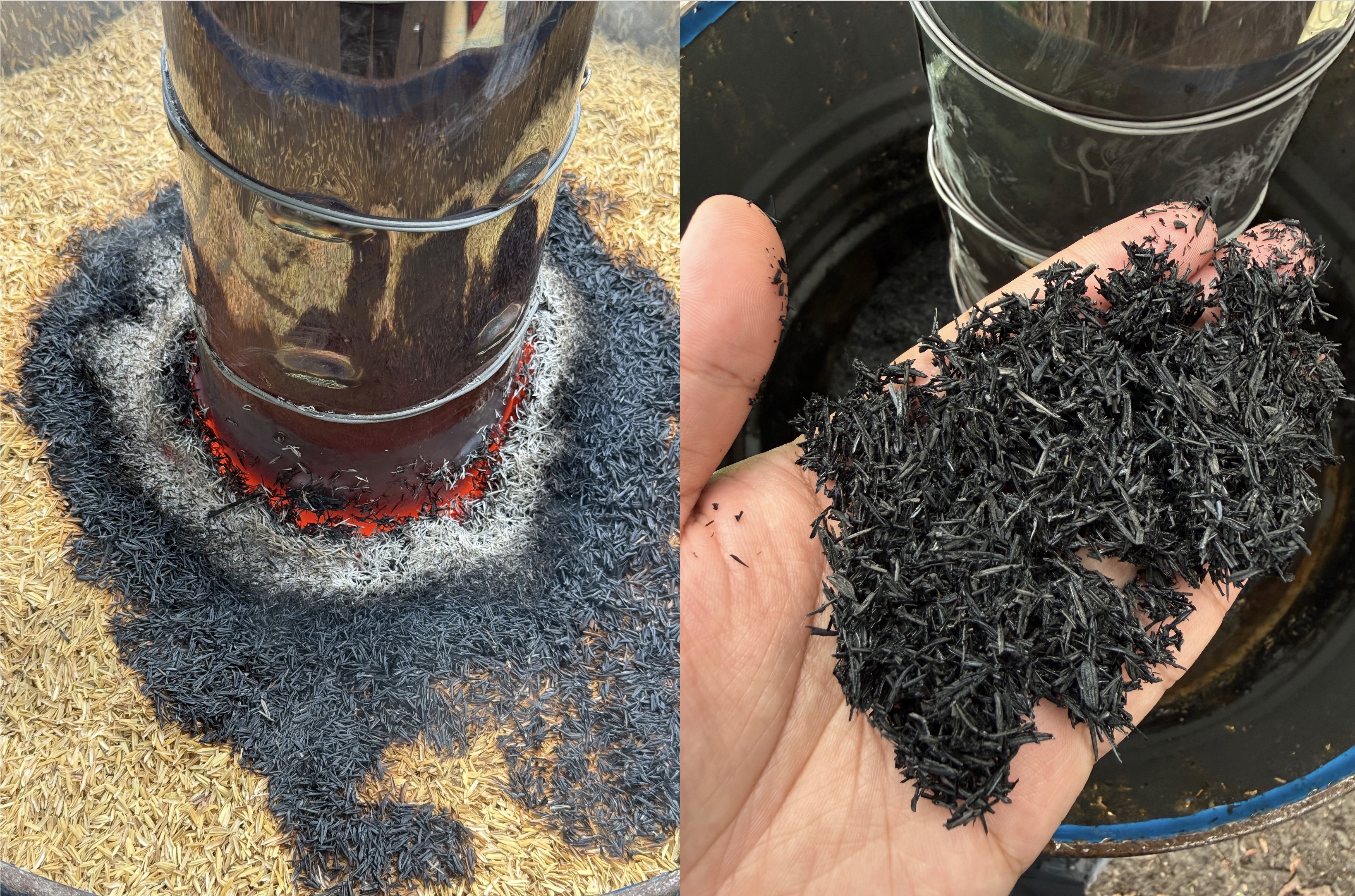
A hands-on biochar workshop utilizing artisan production methods which served as the foundation for farmers to learn the core principles of conversion – where they learned to transform agricultural waste into a stable, carbon-rich soil amendment using low-cost, low-emission techniques designed for farm-scale operations.
A field inspection of the cooperative's agricultural sites, where the technical team assessed terrain, soil conditions, and feedstock availability to design the next phases of implementation.
Cooperative member farmers, along with the organization’s management team and officers participated in the activity. By the end of the day, the foundation had been laid for a project that could, over time, sequester thousands of tonnes of CO2 while improving soil fertility and creating a new income stream for the community.
 Source: Planet2050
Partner farmers convert rice hulls into biochar using a barrel kiln during hands-on training.
Biochar: A Quietly Powerful Climate Tool
Biochar is what you get when you heat agricultural biomass in a low-oxygen environment. The result is a stable, charcoal-like material that locks CO2 away for centuries when added to soil - and, as a bonus, improves water retention, reduces fertilizer needs, and boosts crop yields.
For carbon markets, biochar is one of the few removal pathways that is scientifically robust, durable, measurable, and ready to scale today. For rice cooperatives in the Philippines, the relevance is immediate. Rice husk - an abundant byproduct of milling - is often burned in the open for lack of an alternative, releasing pollution and thick carbon particulates into the air. Converting that husk into biochar turns a waste-and-pollution problem into a resource: it returns carbon-rich material to the soil, helps farmers cut their dependency on fertilizer at a time when prices and supply remain under pressure, and opens up an additional income stream through the sale of carbon removal credits.
It also enables a genuinely circular model when rice mills produce biochar directly on-site. The heat generated during pyrolysis can be captured to dry the grain - replacing traditional, high-polluting boilers - so a single process handles waste disposal, grain drying, soil improvement, and carbon removal at once.
 Source: Planet2050
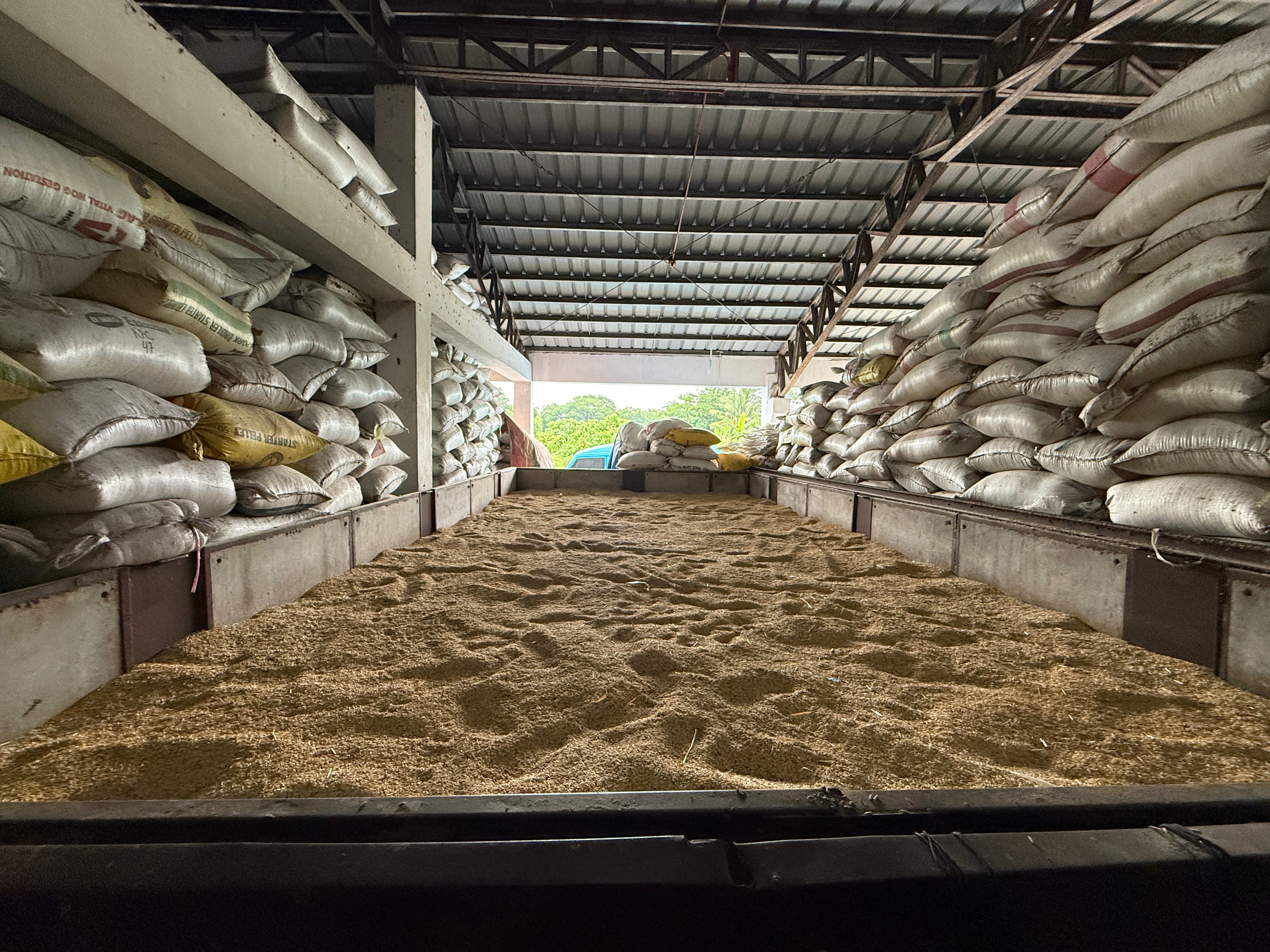
Rice paddy sacks are stored in the cooperative's warehouse, where the central flatbed dryer is preparing the bulk harvest for efficient drying.
Why This Matters for Investors and Climate Alike
The voluntary carbon market is at a pivotal stage. Demand for high-integrity carbon removal credits - the kind backed by real, measurable, durable carbon storage - is growing rapidly, while supply remains constrained. The bottleneck isn't ambition or science. It's capital and capability at the project level, particularly in the regions where the highest-impact projects can be built.
That's the gap Planet2050 is built to close. We invest in and operationally support local project developers - the people on the ground who understand the land, the communities, and the agricultural systems - and equip them with the technical infrastructure, carbon market expertise, and financing they need to bring credible removal projects to market.
The Philippines is one of our priority geographies. It combines a dense network of smallholder farmers, abundant agricultural biomass, and strong cooperative traditions with something equally important from an investment perspective: a nascent but rapidly developing carbon market, backed by clear national ambition to build the regulatory and institutional infrastructure needed to participate credibly in global climate finance. That combination - high project potential on the ground and a country actively building its carbon market architecture - is precisely where early, well-structured project development creates the most value.
The Planet2050 Model
What we're doing in the Philippines mirrors our broader approach: rather than parachute in projects designed elsewhere, we partner with credible local cooperatives, community organizations, and emerging project developers, then provide the capital, methodology expertise, monitoring infrastructure, and market access that allow them to operate at international standards.
This is the model that we believe will produce the next wave of high-integrity carbon removal supply - and the returns that come with it. Retail investors backing Planet2050 are backing a portfolio of real projects rooted in real communities, not abstract offsets.
Bottom Line: The Investment Case
Securing High-Quality Supply: Planet2050 proactively finances and secures the future supply of high-quality carbon removal credits (Biochar) at the source. This directly addresses the structural supply gap in the voluntary carbon market.
Validation of the Planet2050 Model: The partnership validates the effectiveness of the Planet2050 model in closing the critical capital and capability gap for local developers in high-potential markets.
Early Access to Quality Assets: By engaging in the project development phase, Planet2050 is positioned to secure future carbon assets early and on favorable terms.
Scalability and Replicability: The combination of abundant agricultural biomass, a strong cooperative structure, and regulatory commitment in the Philippines demonstrates that the model is replicable and ready for scaling across priority regions.
What's Next
The Bicol project is one of several Planet2050 initiatives underway in the Philippines and other countries. We're actively working with multiple local cooperatives and farmer groups, with additional partnerships and project milestones to be communicated in the coming months.
For the cooperative in the Bicol region, the immediate next phase shifts toward field validation. The critical next step is initiating an operational pilot to produce the first batch of biochar for dedicated soil trial applications. These trials will allow us to gather empirical data on biochar's impact on local rice soil characteristics, while giving farmer-members hands-on experience with the material, its application protocols, and its performance as an organic soil enhancer. This deliberate, trial-first approach ensures agronomic viability and builds authentic community adoption before scaling up infrastructure.
For Planet2050, it's another step in building the infrastructure that turns climate ambition into climate finance - and finance into impact.
_____
Always one step ahead with Planet2050
Visit our Investor Page and sign up to receive the latest updates on our upcoming listing.
Discover more news in our Blog or subscribe to our newsletter so you don't miss any important news from the carbon market.
You have a project to submit to Planet2050? Onboard it here!