


Update, July 13th - Parliament removed the EU Commission proposal to count Article 6-aligned Carbon Credits under CBAM for now, in order to keep the discussion as part of the EU ETS review and future amendments.
The Carbon Border Adjustment Mechanism (CBAM) represents a significant development in European climate policy by extending the European CO2 price to selected imported goods. The main goal is to reduce carbon leakage and create a level playing field for European and international producers. However, the true scope of CBAM may go far beyond the borders of the EU. Analyses suggest that CBAM could not only influence the European market but also shape international CO2 pricing systems and investment flows.
Summary
CBAM integrates CO2 costs into international trade
EU partner countries could develop their own carbon pricing systems to remain competitive
Production decisions could increasingly depend on international CO2 prices
In the long term, Article 6 mechanisms (carbon credits under the Paris Agreement) and regulatory markets could work more closely together.
What CBAM is, simply put
CBAM (the Carbon Border Adjustment Mechanism) is closely linked to the European Emissions Trading System (EU ETS). European companies already pay for their CO2 emissions and CBAM extends comparable charges to selected imports coming into the EU.
The reason is a central problem in climate policy: carbon leakage.
This is the relocation of emission-intensive production to countries with weaker climate standards - in other words, companies moving their dirtiest activities abroad to escape Europe's CO2 costs. CBAM is designed to close that loophole and create a level-playing field.
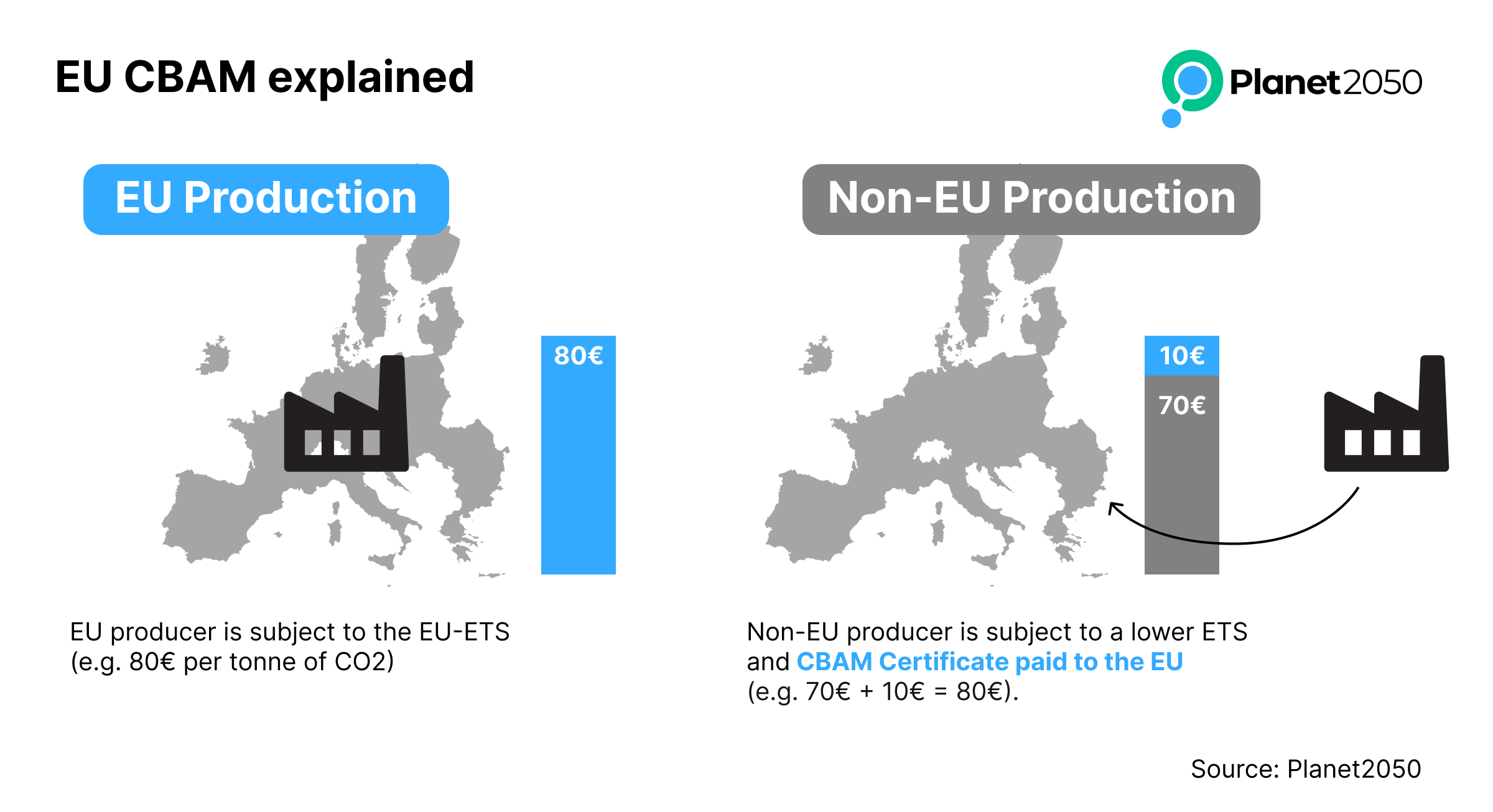
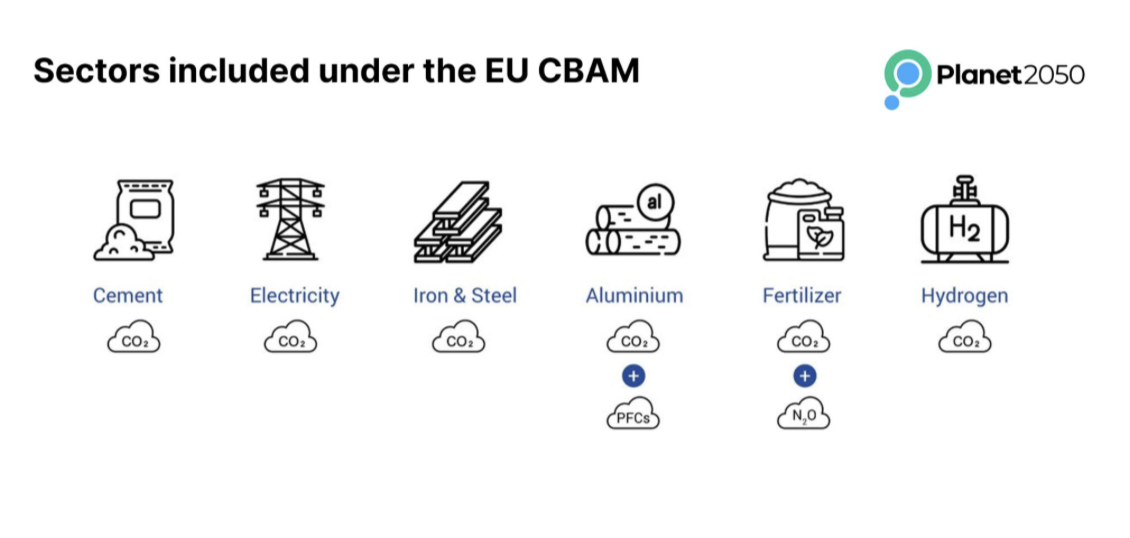
It initially focuses on emission-intensive sectors such as steel, iron, aluminium, cement, fertilisers, electricity, and hydrogen. In these sectors, CO2 is increasingly becoming a decisive cost factor in international supply chains.
Why CBAM is more than a border adjustment
CBAM is currently being further developed. In the ongoing EU review, discussions are taking place on how CO2 costs already incurred in the country of origin can be better taken into account. This adjustment aims to avoid double charging for producers that are both subject to national CO2 regulations and face CBAM costs when exporting to the EU.
International acceptance of the mechanism also matters. If CO2 costs were collected exclusively through CBAM, the financial incentives and revenues could remain primarily within the EU. Planned adjustments are intended to ensure that climate protection measures and CO2 costs in the country of origin are also recognised.
This discussion shows that CBAM should not be seen only as a European climate policy tool, but also as a potential building block for the international coordination of CO2 pricing systems.
Drafted rules for international Carbon Credit use in CBAM
The European Commission has published the draft Implementation Regulation for Article 9 of the CBAM in May 2026, setting out for the first time how non-EU carbon prices will be recognised.
Key provisions include:
Domestic carbon prices paid under a third country's ETS or carbon tax are fully deductible, with no additional EU quality requirements.
International credits (Article 6.2 and 6.4 ITMOs under the Paris Agreement) are accepted, but capped at 10% of reported embedded emissions to limit gaming with low-integrity credits.
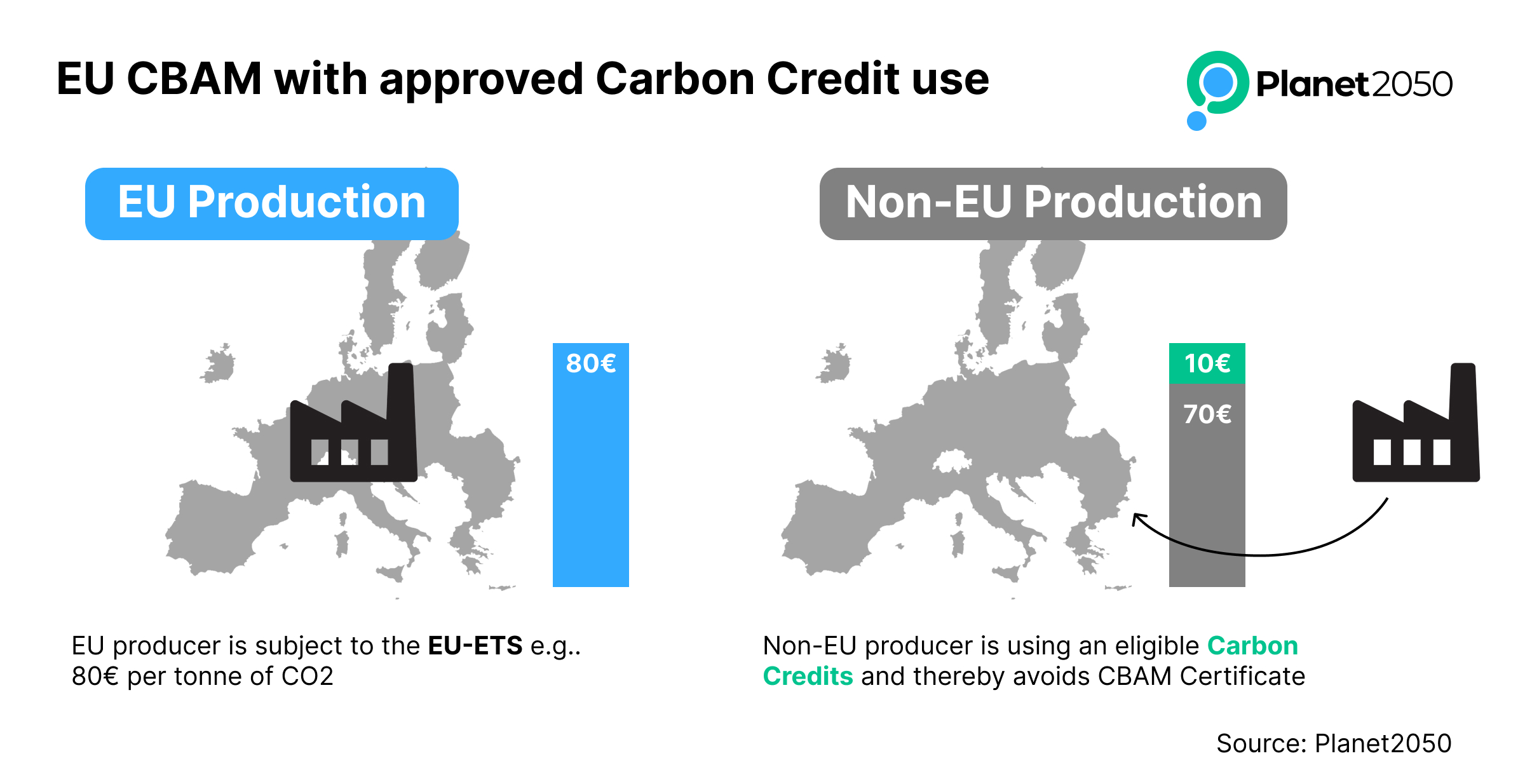
Only high-integrity credits - real, additional, measurable, and independently verified - qualify; an analysis of nearly a billion tonnes of credits found fewer than 16% represented actual reductions.
The "effective carbon price paid" is clarified: net cost after deducting rebates, free allowances, and other compensation.
One accredited person can handle both emissions verification and carbon price certification, cutting compliance overhead.
For producers of steel, aluminium, cement, fertilisers, and hydrogen, a credible domestic price or qualifying Article 6 credits could then mean a lower EU import bill.
Concerns remain for emerging markets: the actual price deduction would demand real emissions data, and Article 6.4 credits only count where authorised for international transfer - excluding most expected issuance. A consultation has taken place in May and June 2026. While final design details are still pending, the direction is becoming clearer.
Update - as of July 2026, the Parliament has removed this option from the CBAM proposal, judging it as still too pre-mature and pushing it under the EU ETS review discussions.
How CBAM influences climate policy beyond Europe
A recent study by the Potsdam Institute for Climate Impact Research analysed trade relationships of 43 countries and 56 economic sectors. The researchers examined how countries might respond to a European CO2 price of 100 US dollars per ton.
The results are notable:
Without CBAM: Global emissions fall by 305 million tons of CO2 per year (about the entire annual carbon emissions of the United Kingdom).
With CBAM: Global emissions are reduced by 399 million tons of CO2.
With national CO2 pricing systems in partner countries: The reduction could increase to 691 million tons of CO2.
This additional emissions reduction is 73 percent higher than the effect of European climate policy alone.
A key mechanism is that export-oriented economies may find it economically more sensible to introduce their own CO2 pricing systems instead of continuously paying CBAM costs when exporting to the EU. Likely candidates include Canada, Japan, South Korea, and Taiwan. This could lead to the so called Brussels-Effect, where European regulation influences policy decisions worldwide.
What does CBAM mean for carbon markets
The impact of CBAM extends far beyond trade. As carbon pricing embeds itself into global supply chains, reliable emissions data is paramount, making Monitoring, Reporting, and Verification (MRV) the essential infrastructure of modern carbon markets.
If regulatory systems align with Article 6 mechanisms, a new demand channel for high-quality carbon credits could emerge - raising the stakes for data transparency and integrity.
Furthermore, while CBAM's primary goal is to prevent carbon leakage and ensure fair competition, it also creates a powerful ripple effect: encouraging third countries to adopt their own CO2 pricing systems.
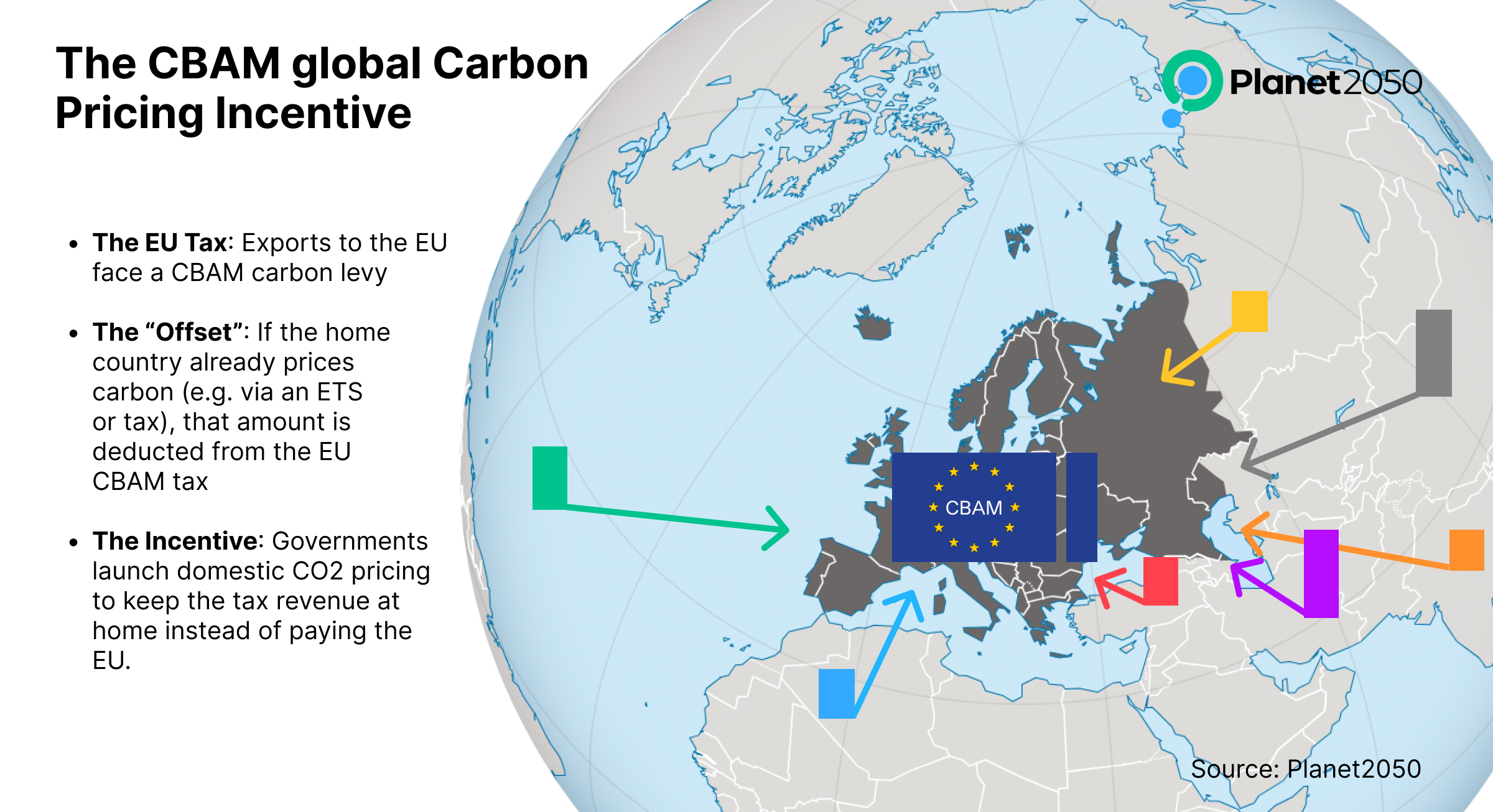 The CBAM level playing field (Source: Planet2050)
Ultimately, this points toward a more interconnected, data-driven, and quality-focused global carbon market.
From European regulation to global CO2 markets
CBAM marks a shift: CO2 is moving from a regulatory line-item to an economic variable that shapes competitiveness, investment decisions, and capital allocation across borders.
For investors, the signal is clear. As carbon costs embed into international supply chains, demand rises for reliable emissions data, transparency, and credible decarbonisation strategies - and for the market infrastructure and common standards that make CO2 pricing comparable across jurisdictions.
If the trend holds, regulatory carbon markets, Article 6 mechanisms, and high-integrity carbon credits will become increasingly interconnected. The value accrues less to any single CO2 price and more to the verification, data, and custody layer beneath it. That infrastructure - robust standards, trustworthy data, transparent mechanisms - is where long-term capital will find durable footing.
What are the next steps for CBAM?
Parliament position (Sept 2026): Following the Council's agreed position in June 2026, the European Parliament is set to adopt its own amendments via plenary vote, after which trialogue negotiations begin.
Scope expansion (from 2028): CBAM extends to ~180 steel- and aluminium-heavy downstream products, with tougher anti-circumvention rules and pre-consumer metal scrap brought into scope.
CBAM Registry goes live: End of 2026.
Default emission factors & benchmarks: Commission to finalise and publish before 1 January 2027, mirroring updated EU ETS allocations for 2026–2030.
Free allocation phase-out begins: EU ETS free allowances for CBAM sectors cut 2.5% annually from 2026, full phase-out by 2034, CBAM fully applying from 2035.
Temporary Decarbonisation Fund: 25% of CBAM revenues (2028–2029) channelled to support EU producers' decarbonisation investments.
Overall, CBAM signals a paradigm shift: moving from a mere regulatory burden toward a strategic realignment where climate protection and economic competitiveness are inextricably linked.
_____
Stay ahead of the market
Go to our Investor page and signup for the alerts to receive listing updates.
Check our Other news on our Blog or subscribe to Planet2050 at to never miss the most important Carbon Market News.