


Biochar Carbon Removal has moved from a scientific concept to a real market with growing demand, strong integrity standards, and major investor interest. It is emerging as one of the most practical “ready-now” removal methods for the net-zero transition. At Planet2050, we are working with a dozen Biochar project developers across the globe anticipating project financing or joint project development.
Summary
Biochar is a durable carbon removal method made by heating biomass in low oxygen, locking carbon into a stable solid.
It has both climate and economic value because it can generate carbon credits, heat, bio-oil, and soil benefits.
The market is growing fast, with strong buyer demand, contracted supply, and increasing use of forward offtakes.
Biochar stands out because it is modular, lower-cost than many engineered removals, and already supported by robust certification standards.
For Planet2050, biochar is a highly investable, high-integrity removal option with strong near-term scaling potential.
What is Biochar?
Biochar is a stable, carbon-rich material produced by heating biomass in a low-oxygen environment. A process known as pyrolysis.

Biochar (Source: Planet2050)
The Origins: while the technology is modern, the concept dates back thousands of years to the Terra Preta soils of the Amazon, where indigenous communities created ultra-fertile land by burying charred organic matter.
The Process: unlike burning wood (which releases CO2), pyrolysis "locks" the carbon into a solid form. This process also creates valuable byproducts: Syngas and Heat (used for renewable energy), and Bio-oil (a precursor for sustainable fuels).
Feedstocks: Biochar can be made from almost any organic waste, including agricultural residues (corn husks, rice straw), forestry waste, and even urban wood waste.
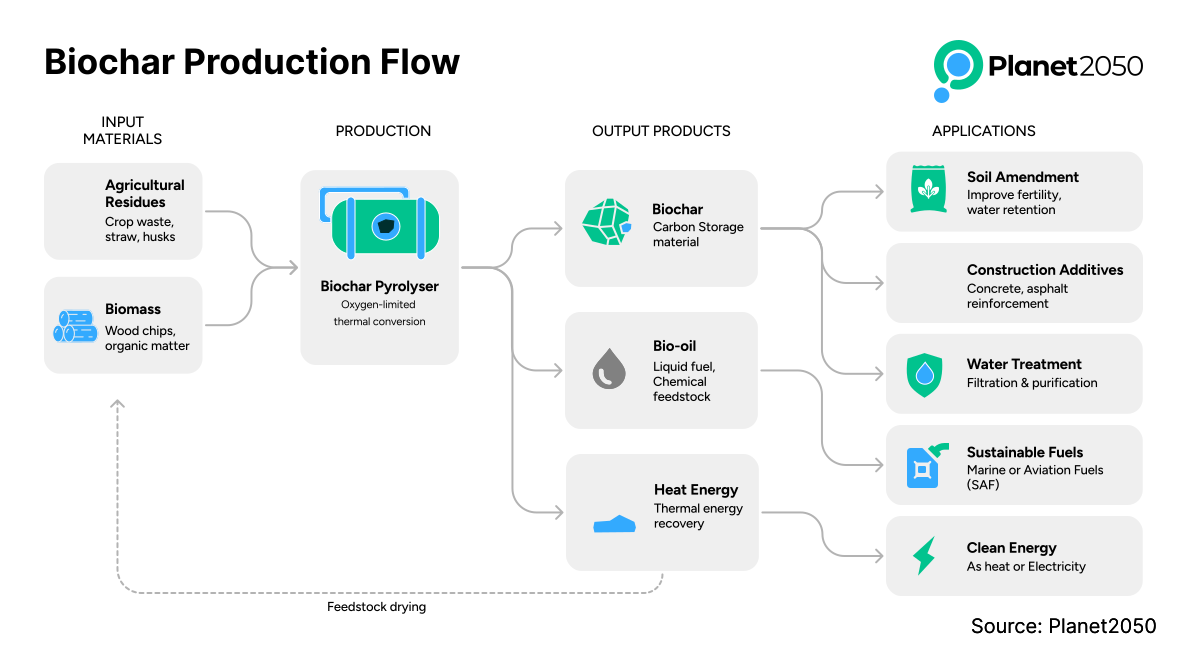
Biochar (Source: Planet2050)
How Pyrolysis Works
When biomass is placed in a reactor (with limited oxygen) and heated to temperatures typically between 350°C and 700°C, it doesn't catch fire. Instead, the chemical bonds within the organic matter break down into three distinct phases:
Solid: Biochar (the carbon "sponge").
Liquid: Bio-oil (can be refined into fuels or chemicals).
Gas: Syngas (often looped back to power the reactor, making the process self-sustaining).

Biochar (Source: Planet 2050)
The Carbon Math: Turning Waste into Tonnes
How does a pile of black charcoal become a carbon credit and how does it create such a profound impact for soil health? - When plants grow, they soak up CO2. When they die and rot, they release it. By intercepting that waste and turning it into biochar, we prevent that release.
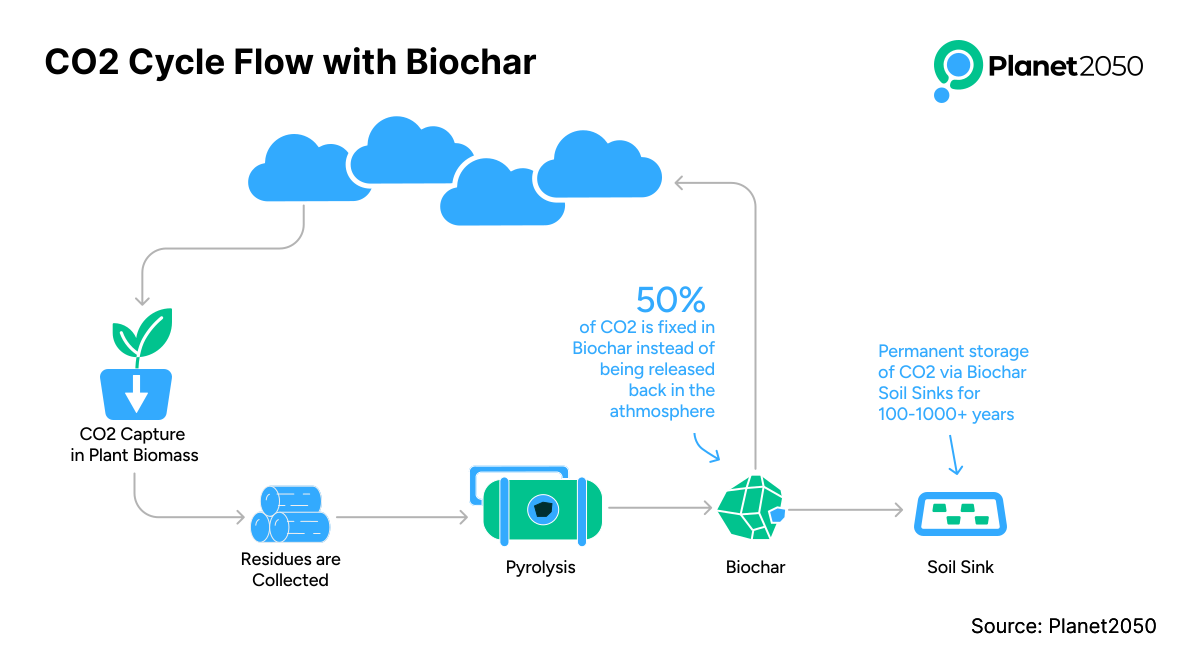
CO2 Cycle Flow Biochar (Source: Planet2050)
Under current standards, 1 tonne of biochar typically represents roughly 1.5 to 2.5 tonnes of CO2 removed from the atmosphere. Because this carbon is chemically stable, it remains sequestered for hundreds, even thousands, of years.
Financial Additionality: Bridging Biochar Cost Gap with Carbon Removal
The production of industrial-scale biochar currently requires a significant capital investment, resulting in costs between 140€ and 200€ per tonne in most cost-efficient setups. This price point remains too high to be commercially viable on its own, especially in emerging markets where biochar use cases, uptake and market maturity are still developing and the local "willingness to pay" for soil amendments remains low.
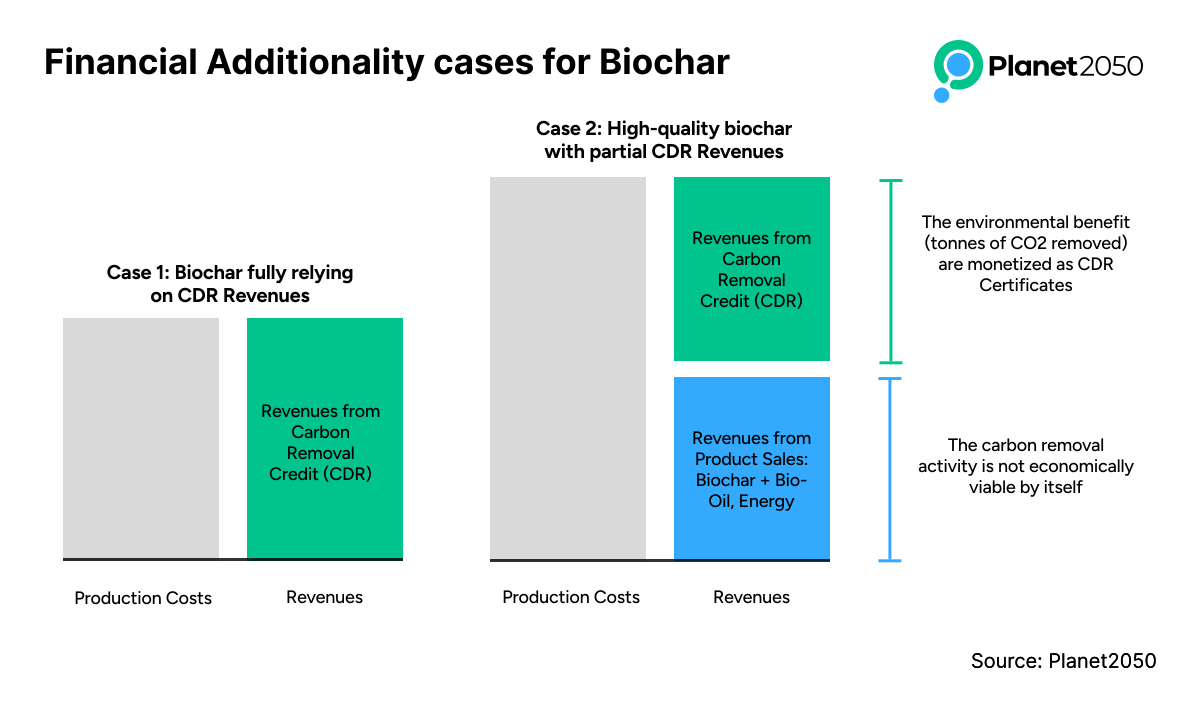
Financial Additionality Cases with Biochar (Source: Planet2050)
Because the physical product and its by-products cannot generate enough revenue to cover the high costs of engineered pyrolysis, carbon removal finance provides the essential bridge to commercial viability through credits also called “Carbon Dioxide Removals” or “CDR credits/certificates”.
By monetizing the permanent sequestration of CO2 through high-integrity credits, the project can cross-subsidize the deficit between production expenses and local market prices. This financial structure allows the project to scale immediately by turning the biochar’s environmental value into a tradable climate asset, ensuring the business remains bankable while the local market matures.
Biochar Certification Standards & Trust
Integrity is the currency of the carbon market. In 2026, several robust frameworks provide the "seal of approval" for Biochar Carbon Removals among leading carbon certification standards:
Puro.earth: one of the market leaders for engineered removals, issuing CO2 Removal Certificates (CORCs)
Carbon Standard International (CSI): Pioneer of small-scale and artisan biochar methodologies producing C-Sink certificates
Isometric: high-integrity registry with science-based digital monitoring for CDR “verified credits”
Verra: leading legacy Voluntary Carbon Market standard which added a Biochar methodology
Rainbow: a European Carbon registry focused on circularity, bioenergy and engineered carbon removal, including biochar
BioCarbon: a Colombian standard focused on nature and biodiversity which recently expanded with a biochar methodology.
Biochar is now a recognized Removal Method by the European Union
On February 3, 2026, the European Commission formally adopted the first set of certification methodologies under the Carbon Removals and Carbon Farming (CRCF) Regulation, officially categorizing Biochar Carbon Removal (BCR) as a permanent carbon removal.
In 2026, this framework is expected to fundamentally repair the "trust gap" in the biochar sector by replacing fragmented private standards with a government-backed quality benchmark.
By establishing the QU.A.L.ITY criteria-Quantification, Additionality, Long-term storage, and Sustainability-the EU has introduced mandatory safeguards, such as a 200-year permanence threshold and a 5-year re-certification cycle.
This adoption marks a pivotal transition from abstract policy to a functional market "operating system", seeing as a very positive side for investors and proponents in the European Biochar Carbon Removal sector.
Biochar Production Types
The market currently utilizes two distinct production philosophies:

Industrial Biochar
Here Biochar is produced in large-scale facilities, often automated to run continuously and engineered to optimize the capture of byproducts. Because they operate in a "closed-loop" system, they can precisely control temperatures to ensure the highest quality of carbonization.
For investors, the main draw here is MRV (Monitoring, Reporting, and Verification): sensors provide real-time data on every gram of carbon produced, making these projects the "gold standard" for large-scale corporate carbon removal offtake deals. Additionally, these large scale units yield by-products like syngas, bio-oil and heat. These can significantly enhance the economic viability and overall efficiency of biochar production systems.
Artisan Biochar
On the other hand, biochar can be produced via decentralized and community-driven models. It typically uses smaller, lower-cost technology like "Flame Cap" or "Kon-Tiki" kilns operated by smallholder farmers. While it lacks the massive throughput of a factory, it wins on social impact; not only creating fertile soils, but involving grass-root level interventions, knowledge sharing and benefits.
These projects often convert agricultural waste that would otherwise be openly burned or landfilled — a major source of local air pollution. By empowering local communities to create their own "black gold," these projects offer high additionality and support multiple UN Sustainable Development Goals (SDGs), making them scalable investments with strong environmental and social returns.
Applications: Beyond the Soil
While traditionally used as a soil amendment, biochar’s versatility is a key driver of its market growth.
Agriculture: increases crop yields by 13% and soil organic carbon by 28% to 39%. Water retention can be increased up to 30%.
Construction: adding just 1% biochar to concrete can sequester 0.5 gigatons of CO2 annually and reduce the industry’s footprint by 20%.
Infrastructure: used in asphalt and water filtration systems to replace carbon-intensive materials.
Pricing of Biochar Carbon Removals
Biochar carbon removal prices can look inconsistent across sources because a “price” is not just the cost of making biochar. It is a bundled signal that mixes production economics with carbon-accounting credibility and delivery risk.
The following shows a comparison of price and durability of popular carbon removal methods, based on public market data and observations by Planet2050.
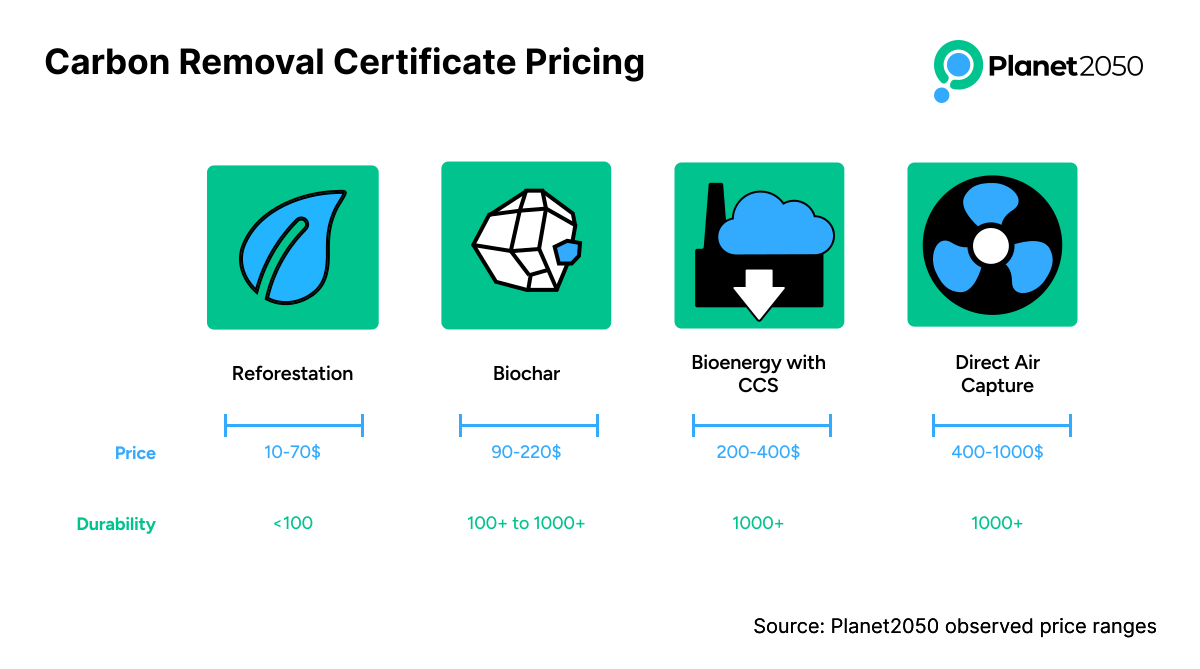
CDR Pricing (Source: Planet2050)
What a biochar “price” really represents
A biochar carbon removal price is not just the cost of producing biochar. It bundles several elements into one number:
the physical conversion of biomass into stable carbon
the quality of biochar produced and its permanence guarantee
the cost of measuring, reporting, and verifying how much CO2 is removed
the risk that the carbon is overstated or not permanent
the timing of delivery (already removed vs promised in the future)
and the credibility of the standard issuing the credit
Different datasets emphasize different parts of this bundle, which is why prices can look inconsistent at first glance.
Why biochar prices differ
Biochar credit prices aren't one-size-fits-all; they change based on when you get the credits, with immediate deliveries being more predictable than long-term future contracts. How the biochar is made also matters, as large-scale industrial projects are viewed as more reliable—and therefore more expensive—than smaller, manual operations. Finally, better data leads to higher prices, because buyers are willing to pay a premium for "high-integrity" credits that can prove the carbon is truly gone and safely stored.
The role of standards in shaping price
Standards are how integrity gets translated into enforceable rules. They don’t set prices, but they shape cost structures and buyer trust.
Some standards require:
conservative assumptions about permanence,
detailed life-cycle emissions modeling,
strict feedstock sustainability criteria,
frequent third-party verification.
Stricter standards raise project development and verification costs, but they also reduce buyer risk. That reduction in risk often supports higher prices or enables long-term procurement relationships. This is why two biochar credits can trade at different prices even if the underlying biochar looks similar: the standard encodes how much uncertainty the buyer is accepting.
One of the clearest examples of standards influencing pricing comes from Puro.earth. Puro focused early on engineered carbon removal and issued Carbon Removal Certificates (CORCs) under defined methodologies. Over time, this allowed them to publish transparent market price references, including the CORCCHAR biochar index, hosted by Nasdaq.
Puro reports that CORCCHAR prices in 2025 have typically clustered around $125–$145 per tonne of CO2, reflecting arm’s-length transactions reported under the Puro Standard. The reason these prices appear stable is structural, not accidental. Nasdaq’s published methodology shows that CORC index values are based on market-negotiated transactions and emphasize near-term delivery (≤182 days) rather than long-dated promises.
The Market Opportunity: Growth by the Numbers
The Biochar Carbon Removal (BCR) market has experienced an impressive growth since starting in 2020-2021. Based on Data from CDR.FYI, the market volume for BCR grew from $14.6M in 2022, to $33.9M in 2023, and $181.5M in 2024. This represents a Combined Annual Growth Rate (CAGR) of 131.6%.

CDR.fyi also reports that BCR is by far the most common removal method purchased in contracted credit sales, with 290 unique purchasers - almost five times more than the second most popular removal method. The average volume bought by a purchaser in a given year has increased, from 542 tonnes in 2022 to 762 tonnes in H1 of 2025.
Why Investors are Watching
Supply Scarcity
As of late 2025, over 90% of available industrial biochar supply was already contracted up by large buyers like Microsoft, Google, and JPMorgan. In a supply-constraint environment, the only possibility to lock in large supply of BCR credits is to close large offtakes or invest in new production capacity now to ensure future delivery.
Low Entry Barrier
Unlike Direct Air Capture (DAC), which requires billions in CapEx, biochar projects can be small-scale and modular. In comparison, mid-scale indutrial facilities often have CAPEX requirements below 1.5 million USD. This makes BCR the "dominant entry point" for carbon investors.
Revenue Stacking
Biochar producers don't just sell carbon credits; they sell the physical biochar, the heat, and the bio-oil. This diversified income makes these projects more resilient than "pure-play" removal technologies.
CDR Buyers: Who is Driving the Market?
The biochar market is no longer a niche experimental space. It is being fueled by a "long tail" of nearly 300 unique purchasers, but a few giants are setting the pace.
The following is Biochar Buyer's Leaderboard as presented by CDR.fyi in September 2025.

BCR Purchaser Leaderboard (Source: CDRfyi)
The Heavy Hitters
Microsoft: In 2025, Microsoft secured a historic 1.24 million tonne deal with Exomad Green—the largest biochar agreement in history.
Google: Committing to roughly 200,000 tonnes by 2030, Google is integrating biochar into its "net-zero by 2030" strategy.
Financial & Professional Services: Firms like JPMorgan Chase, BCG, Swiss Re, and Nasdaq account for a significant portion of purchases. For companies like Swiss Re, biochar makes up 99% of their durable carbon removal portfolio. Their rationale is simple: biochar is currently the most cost-efficient way to buy proven durability.
Key Trends for 2026
Value Chain Integration: companies like Louis Dreyfus Company are now contracting biochar directly for their own agricultural supply chains to reduce Scope 3 emissions.
Market Liquidity: the time from credit issuance to retirement has dropped from 95 days (2021) to just 22 days (mid-2025), indicating a highly liquid and efficient market.
Forward Offtakes: Buyers are moving away from "spot" purchases (buying what exists) toward "offtake" agreements—pre-buying years of future production to secure supply in a tightening market.
Conclusion: A "Ready-Now" Investment
For Planet2050, Biochar Carbon Removal represents the most pragmatic path to gigatonne-scale removal. It is cost-efficient, technologically proven, and offers significant co-benefits for food security and industrial innovation. As the market trends toward $3 billion by 2030, the window for early-stage participation is closing fast. Biochar is no longer just a "green" project, it is a cornerstone of the emerging circular carbon economy.
____
Stay ahead of the market
Investor Updates: Sign up on our Investor Page to stay informed on our upcoming listing.
Onboard your own project here.