


Rice straw in Thailand is being turned from a pollution problem into a climate solution through biochar and carbon finance. The project shows how local waste, strong partnerships, and early-stage funding can create both permanent CO2 removal and new income for farmers.
Summary
Planet2050, GIZ Thailand, Enable Earth, and local authorities are working together on a Thai–German biochar project.
Rice straw, which is often burned, can instead be converted into biochar through pyrolysis.
The project cuts air pollution, reduces CO2 emissions, improves soil, and creates income for farmers.
It also has potential to generate high-integrity carbon credits for the global market.
Thailand could become a blueprint for scaling climate finance and biochar projects across the region.
Thai-German Project: How Rice Straw Waste Becomes a Multi-Million Investment
A pioneering project initiated by Planet2050 in collaboration with the Central Thailand Agricultural Authority, the German Agency for International Cooperation (GIZ) Thailand, and climate project developer Enable Earth is transforming agricultural waste into permanent climate protection.
By producing biochar, the project aims to reduce air pollution while securing additional income for farmers. Another major benefit: it can provide the global CO2 market with high-integrity carbon credits. Planet2050 was on site to support the initiative. Our goal is to make this climate opportunity accessible to our private investors.
Nakhon Sawan/Thailand. Every year, the same scene repeats itself: after the rice harvest, thick gray smoke blankets large parts of Thailand. Millions of tons of rice straw are burned to clear the fields. The smoke is both a burden on public health and an accelerator of climate change. But in the province of Nakhon Sawan, a new path is now being explored.

When Thai farmers burn rice straw, CO2 is released in dense plumes of smoke. (Source: Bangkok Post)
Turning Point in Rice Production: Partnerships for Biochar
In mid-January 2026, Planet2050 initiated a workshop on site, which we conducted together with our partners, Enable Earth, the Thai Agricultural department and the German Agency for International Cooperation (GIZ) Thailand, for local farmers. A total of 40 participants were able to see for themselves that rice straw, instead of being burned in an environmentally and health-damaging way as before, is not waste but a valuable resource for producing high-quality biochar.

Lucas Zaehringer, CEO of Planet2050, and Pasinee Tangsuriyapaisan, Founder of Enable Earth, presenting biochar and carbon removal opportunities (Source: GIZ Thailand)
The Impact of Biochar: Permanent Carbon Dioxide Removal (CDR)
Biochar is the result of pyrolysis, a controlled heating of organic waste in an oxygen-free environment. Unlike harmful open burning, which immediately releases carbon as CO2, pyrolysis converts it into a highly stable form. When incorporated into soil, biochar enables carbon storage for several hundred years, thereby providing proof of permanent carbon dioxide removal (CDR).

Lisa Faust, GIZ, concluding the workshop day in Nakhon Sawan in front of farmer group leaders and local administration stakeholders. (Source: GIZ Thailand)
Fourfold Benefit: Income, Climate Protection, Health, and Soil Improvement
Income: Farmers receive a stable income by selling rice straw that is processed into certified biochar.
Climate protection: CO2 is bound over the long term. There is no release of CO2 into the atmosphere through burning.
Health: Harmful air pollution caused by fine particulate matter is reduced.
Soil improvement: Biochar acts like a sponge in the soil, improving nutrient and water retention and thereby reducing the need for chemical fertilizers.
Local Voices on the Pilot Project
The pilot project took place in central Thailand. There, we trained representatives and leaders of agricultural cooperatives and universities in the construction and use of low-temperature pyrolysis kilns. For the demonstrations and training sessions, simple handcrafted pyrolysis equipment were used. In addition, farmers have been trained by Enable Earth on how to enrich biochar with nutrients and prepare it as fertilizer, mixed with compost or manure.
“If our biochar pilot projects using rice straw are successful, this could be a real turning point for many countries in the region. Farmers would then have a strong incentive to fundamentally change their current practices,” said Lisa Faust of GIZ, Project Lead of the Biomass to Energy component of the Thai–German Cooperation on Energy, Transport and Climate Change (TGC-EMC).
Our role: Planet2050 is both a co-initiator of the workshop and a co-financial supporter of the project, while also acting as a potential future offtaker of high-quality carbon dioxide removal (CDR) credits, which we will supply to the global carbon market.
As a next step, we will conduct an expanded pilot phase before launching an industrially scalable project together with local carbon project developers and implementation partners.
.jpg) Workshop participants from the District Department of Agriculture and the Ministry of Energy (Source: GIZ Thailand)
Workshop participants from the District Department of Agriculture and the Ministry of Energy (Source: GIZ Thailand)
Ambitious Goals: From Smoke to Carbon Credits
The local goal is ambitious: Nakhon Sawan is the province with the highest share of burned agricultural residues. An estimated 500,000 tons of rice straw are generated and burned there each year. This corresponds to the release of approximately 800,000 tons of CO2.
Lucas Zaehringer, CEO of Planet2050, emphasizes the need for change: “The currently practiced burning of rice straw, with heavy smoke formation and the associated climate-damaging release of CO2, is immense. This makes it all the more important for us at Planet2050, together with our local partners, to highlight the problem through education and technology transfer and to empower farmers with solutions. Even though the government is threatening to cut subsidies for burning, farmers often lack an economically viable alternative. The reason is that collecting, transporting, and storing rice straw involves high costs, and the local market for other biomass products is limited.”
“The first step is to recognize that rice straw is not waste but a valuable asset,” Zaehringer continues.
Through pyrolysis, it is converted into biochar. Biochar, in turn, improves soil quality, prevents CO2 emissions, and provides farmers with a stable income from selling the straw. The revenues from the subsequently certified carbon credits benefit the entire community and support the development of the province.
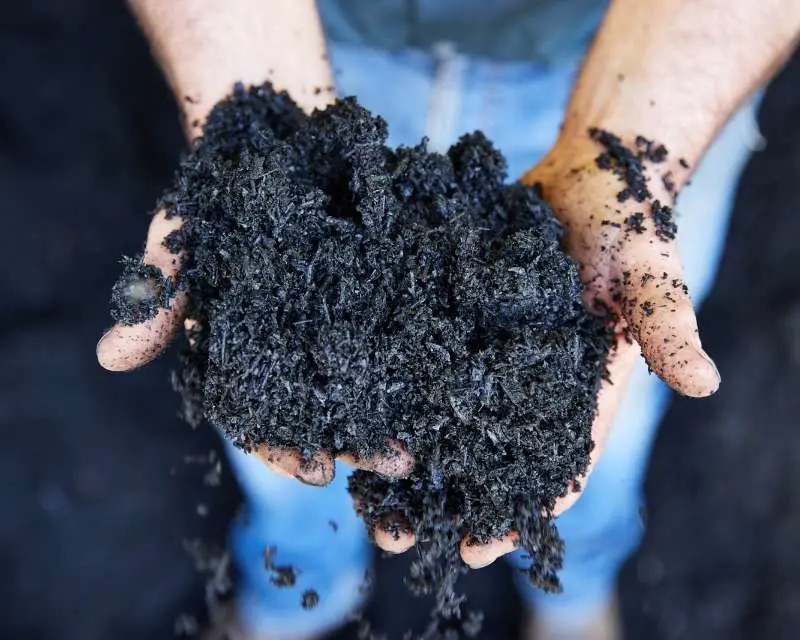 Biochar made from rice straw (Source: TheCharMaker)
Planet2050: How Private Investors Benefit
For the global CO₂ market, these projects are essential to neutralize residual emissions from hard-to-abate sectors such as aviation or heavy industry. The challenge lies in financing the necessary climate projects and scaling them effectively. This is where Planet2050 comes in.
“We want high-quality carbon removal to become accessible to both large institutions and private investors. There are many strong concepts, but the current bottleneck is the financing of climate projects,” explained Lucas Zaehringer, CEO of Planet2050. “That is why we are preparing for our stock market listing in 2026. Our goal is to give private investors the opportunity to invest in verified CO2 removal projects, ranging from biochar in Thailand to technological solutions in Europe.”
Each ton of biochar is strictly certified and digitally traced from the origin of the biomass through the production until the secure storage of CO2 in the soil for at least several hundred years.

Lucas Zaehringer explains the business model of Planet2050 during the workshop in front of farmers and delegates (Source: GIZ Thailand)
Thailand serves as a blueprint: a local environmental problem can, through early-stage climate financing such as via Planet2050, strong partnerships, and technology, be transformed into an effective climate solution and improved income for rice farmers.
_____
Stay ahead of the market
Investor Updates: Sign up on our Investor Page to stay informed on our upcoming listing.
Onboard your own project here.